Refixing Our Eyes
2026, Society, and the Prolem Christians Must Own

I started watching the series Yellowstone over the holidays. The series ran for five seasons, beginning in 2018 and ending in 2024. So I’m just a wee bit late in watching all about the Dutton family, or more like the dysfunctional Dutton family.
I don’t want to give away spoilers, but if you’re familiar with the series, then you know how dysfunctional the Dutton family is. Although fictional, as I watch each episode, here is a family where distrust and resentment flow through the ebb and flow of their daily lives. Conspiring behind each other's backs is par for the course if it will give one family member an advantage over another. Here is a family that has their own little kingdom, a large cattle ranch set in the state of Montana, with the money and reputation to leverage power for their own corrupt gain.
Now, there is more to the show and the family dynamics than I am sharing here. But I make these observations because it reminds me of how humans are so prone to chasing after kingdoms that cannot last. We chase after kingdoms that are more of an illusion because they never deliver the peace and security they pretend to offer. They’re little kingdoms whose foundations are so feeble and frail that we must constantly strive to keep them, exerting the Nietzschian will to power—becoming monsters if necessary.
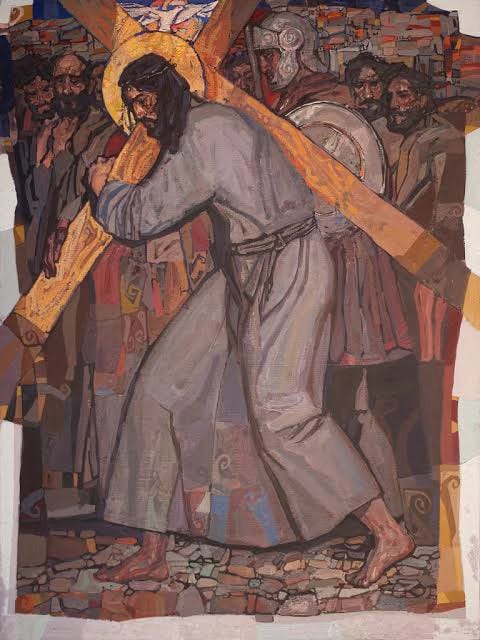
Jesus Christ offers us a different kingdom, one whose foundation doesn’t depend on our own strength but upon the redemptive work of God. The Kingdom of God is what Jesus proclaimed as the good news he was inaugurating in the world.
“After John was put in prison, Jesus went into Galilee, proclaiming the good news of God. ‘The time has come,’ he said. ‘The kingdom of God has come near. Repent and believe the good news!’”1
(Matt 4:17; Mk 1:14-15). This means the Kingdom of God is received by us rather than achieved by us. That’s good news because it means we become participants in a kingdom that depends on the redemptive power of God rather than our feeble and ultimately unreliable power. Participating in God’s kingdom requires only repentance and belief in the good news, ultimately trusting that, through the crucifixion, resurrection, and exaltation of Jesus Christ, God’s kingdom is eternal. Such participation is what we are doing as we follow Jesus Christ,2 which becomes our witness or testimony to God’s kingdom.
Either we run the race marked out for us by God, fixing our eyes upon Jesus, or we’ll run another race, marked out by a kingdom of this world, fixing our eyes on things like partisan politics.
I'm sharing this with you because I have a significant concern at the start of 2026. For over twenty-five years, I have served as a minister of the gospel and have done so among the Churches of Christ. I am ever thankful to serve in ministry, but over time, ministry has become more difficult. Churches are declining and aging. Congregational ministry is more challenging because the cultural contexts of established congregations have changed, and the idea of planting new churches remains beyond the imagination of many congregations.
Over the years, as Christians have encountered the difficulties of ministry and congregational decline, the blame was often attributed to the rise of the isms: postmodernism, relativism, and secularism. Now I recognize that the emergence of any new cultural shift presents new challenges that can make ministry more difficult. However, rather than making these isms into scapegoats for the difficulties of ministry, we have to spend more time looking in the mirror.
To whatever extent social media can tell us about the decline of Christianity in the United States, much of the problem is one that Christians must own. Far too many professing Christians appear more interested in seeking after the little kingdoms of this world. Just observe the responses to the latest breaking news regarding politics and society. This past weekend, it was the news of the U.S. military strike in Venezuela, leading to the capture of the Venezuelan President Maduro. Like clockwork, even before all the facts and details were known, Christians immediately began to either condemn or defend the U.S., which seemed more like either a condemnation or an affirmation of President Trump. Why? It’s as though partisan politics has become the master, enlisting believers into the service of ideological kingdoms of this world.3
We, who profess to be Christians, must reconsider what race God has called us to run. Consider this text from Hebrews 12:1-2:
“Therefore, since we are surrounded by such a great cloud of witnesses, let us throw off everything that hinders and the sin that so easily entangles. And let us run with perseverance the race marked out for us, fixing our eyes on Jesus, the pioneer and perfecter of faith. For the joy set before him he endured the cross, scorning its shame, and sat down at the right hand of the throne of God.”
In this text, our life as Christians is described as a race, and we are urged to keep our eyes fixed on Jesus Christ as we run it. Here’s the challenge: We can only run one race at a time! Either we run the race marked out for us by God, fixing our eyes upon Jesus, or we’ll run another race, marked out by a kingdom of this world, fixing our eyes on things like partisan politics.
If we want to see Christianity thrive on mission with God in the United States, seeing the nation pursue the way, truth, and life of Jesus Christ, then we must live as a witness of God’s kingdom. That means running the race that Jesus Christ ran, keeping our eyes fixed upon our Lord.
Whatever the United States once was, it is a pluralistic nation of many religious, political ideologies, and social values. With all due respect to the nation's cultural diversity, if we’re followers of Jesus, we want to see people in the United States become followers of Jesus. The only way that happens is for us to live as witnesses of God’s kingdom, and that only happens by continuing to run the race God has marked out for us to run.
As 2026 unfolds, perhaps this is a time to renew our commitment as Christians and refix our eyes upon Jesus Christ—the pioneer and perfecter of our faith!
Mark 1:14-15; cf. Matt 4:17. All scripture quotations are from The Holy Bible, New International Version, NIV. Copyright © 1973, 1978, 1984, 2011 by Biblica, Inc. Used by permission. All rights reserved worldwide.
Mark 1:17; Matt 4:19.
Now I’ll be the first to admit that I have been just as guilty in times past. There have been times when I have rushed to take up a side with little discernment. There have also been times when I sounded more like an echo chamber of partisan ideology than a follower of Jesus. I regret that. I also want to be clear that Christians should never speak about events and happenings. In a society where human trafficking, racism, and violence are on the rise, Christians should speak, but there needs to be discernment. Any response from Christians ought to reflect the good news of Jesus Christ and the kingdom of God rather than sound like an echo chamber of partisan politics. The question Christians must discern is how to respond to events in a manner that reflects the good news of Jesus Christ and the kingdom of God?
Thank you for sharing this Refixing Our Eyes is a timely reminder of where our focus must always be as believers. In a world full of distractions and shifting priorities it’s easy to lose sight of what truly matters but Scripture calls us back again and again to fix our eyes on Jesus the Author and Perfecter of our faith Hebrews 12:2. When we keep our gaze on Him the noise fades and our hearts align with God’s purposes. Paul reminded the believers in Philippi to let their manner of life be worthy of the gospel of Christ and stand firm in one spirit striving side by side for the faith of the gospel Philippians 1:27. This only happens when we keep our eyes on Christ and not on the temporary things that pull at our attention. Jesus Himself said that where our treasure is there our heart will be also Matthew 6:21 and that if our eye is healthy our whole body will be full of light Matthew 6:22. Let us also remember that fixing our eyes on Christ helps us to resist temptation and not be swayed by the fleeting pleasures of the world 1 Corinthians 10:13. The apostle Peter encourages us to humble ourselves under God’s mighty hand so that He may lift us up in due time 1 Peter 5:6 and to cast all our anxieties on Him because He cares for us 1 Peter 5:7. Thank you again for sharing this encouragement. May the Lord continually open our eyes to see what is eternal help us to run with perseverance the race marked out for us Hebrews 12:1 and to press on toward the goal for the prize of the upward call of God in Christ Jesus Philippians 3:14 and may our lives bear fruit that lasts John 15:16.